“For me, the story of Beit Hayat began with a woman, not a building.”
I grew up believing that a woman’s role was to obey. My first act of rebellion was against my mother; I did not want to become her. I thought freedom meant becoming her opposite.
Years later, I understood her differently. What I had mistaken for submission was quiet strength. She held our family together through generosity, dignity and love. She rarely stood at the centre of the room, yet she was always its heart.
My mother’s name was Hayat: Life in Arabic.
When, after nearly two decades of struggle through bureaucracy, corruption and war, I finally gained the right to restore the Damascene house I had fought to save, I knew its name before I knew its future: Beit Hayat, a House of Life.
Like my mother, the house speaks softly. Behind its modest walls lies a courtyard of light, water, jasmine and citrus trees: a hidden world that reflects the unseen strength of the women who sustained homes and communities.
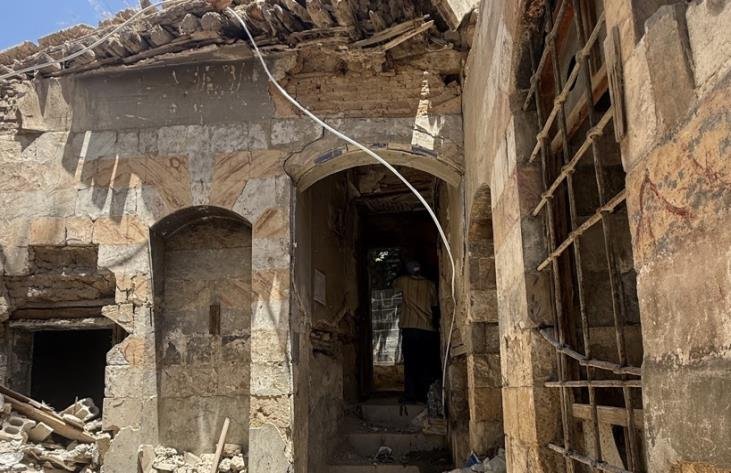
The house’s story mirrors Syria’s recent history. Purchased to preserve a fragment of Damascus’ heritage, it endured years of neglect and war. Stones were stolen, carved wood disappeared and rooms deteriorated. Yet the house survived.
Today, Beit Hayat is more than a restoration project. It is an act of return: to a city, to memory, to craftsmanship and to the belief that culture is rebuilt through the places where people gather, create and share.
Named after one woman’s resilience, Beit Hayat will become a Living Cultural House for artists, writers, filmmakers, musicians, researchers and neighbours: a place where life can begin again.
Lina SinjabFounder, CEO